Breaking Free from Alcohol
An honest guide to reclaiming your life.

The very first thing a person must remove from their mind is the belief that drinking alcohol is acceptable, or that drinking a little is fine, or that drinking occasionally is harmless. The reality is that this habit sneaks up on the drinker, and the regret arrives much too late.
Not just alcohol, but any kind of intoxicant is deeply harmful.
And if someone tries to convince you otherwise by saying, “What is wrong with it, alcohol is made to be consumed; it helps you socialize, it helps you express your feelings more freely,” then you have every right to respond: if you need alcohol just to hold a conversation or create an atmosphere, you are not living your life with a conscious mind. When you cannot face your fears, you can grow. And alcohol is exactly doing the same.
Gradually, drinking to socialize or to express yourself becomes a daily ritual.
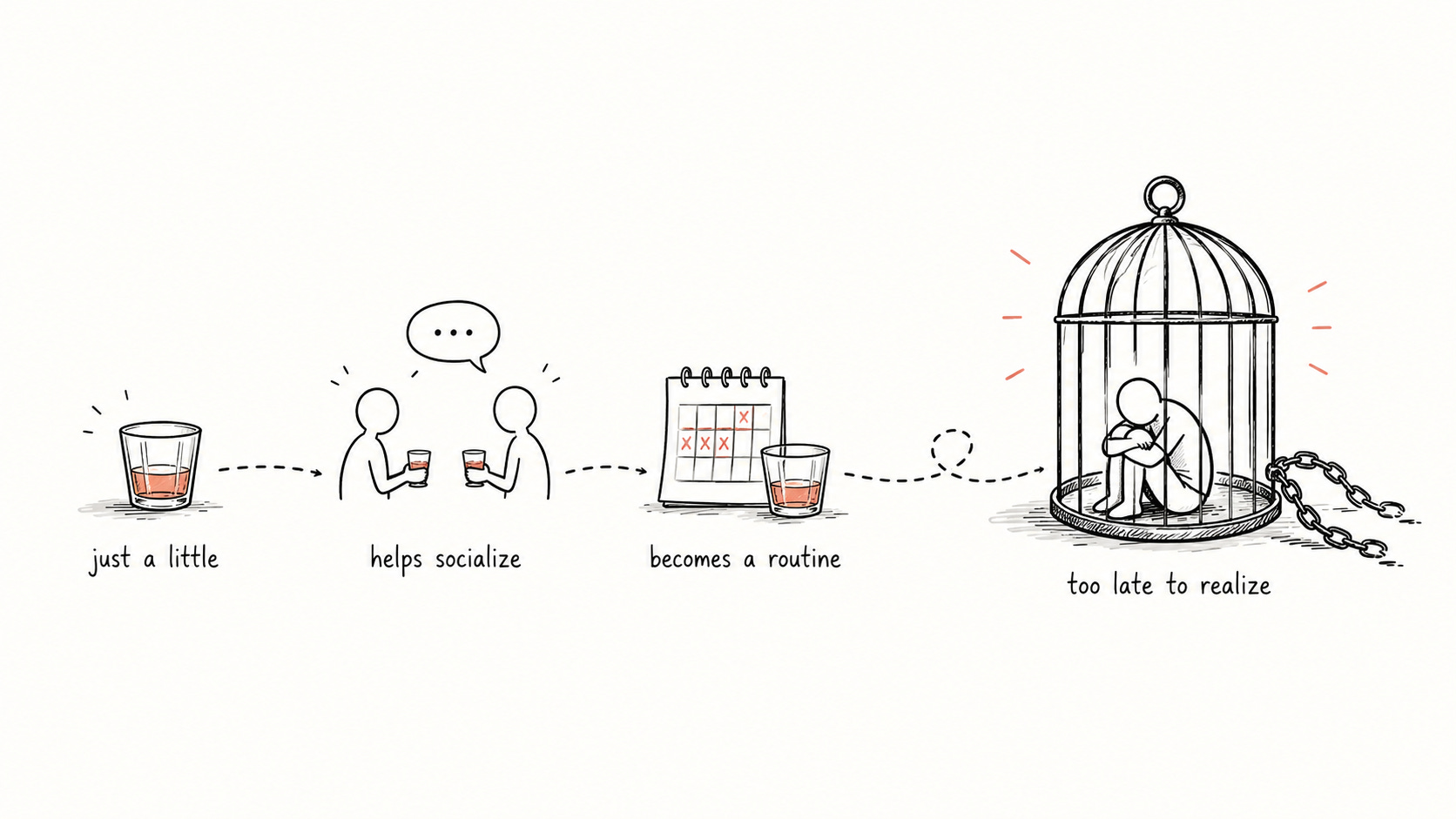
The person does not even realize when this bad habit fully consumes them.
At that point, they forget their responsibilities toward their family. Intoxication becomes their routine. And living in that haze of alcohol, day and night, becomes deeply painful, not just for the person but for everyone who loves them.
If anyone thinks that a drinking habit can be broken in a single day, that thought is completely wrong. Drinking is a habit that draws the person toward itself with a strong pull. Just as physical urges build pressure until released, a drinker believes that alcohol is relieving their stress, when in reality, that belief is never justified. Alcohol temporarily slows down the thinking process. The mind loses focus on its worries. The person feels uncomfortable thinking clearly and mistakes that foggy relief for peace.
These same thoughts keep forcing the person to drink again and again.
Life has its ups and downs. That is unavoidable. But when a person is surrounded by problems, the easiest escape they find is intoxication. They chose the bottle. Just as physical acts bring a sense of physical and mental comfort to some, alcohol feels physically and mentally soothing to the drinker.
Alcohol triggers a chemical reaction inside the body that makes the person feel lighter.
It heavily affects their ability to think and understand. After drinking, a person’s mood becomes focused on whatever emotional turmoil they are experiencing. If something good has happened, they become euphoric.
If something bad has happened, they spill out their grief openly. Or they enter a state of numbness, simply observing the world around them.
If someone thinks they can make a family member or a friend quit drinking by force, they are completely mistaken. No rehabilitation center and no medicine can by itself remove the addiction from a person.
These places can offer a drug-free environment for a period of time. But the real question is: what happens when that person steps outside that environment? Will they not crave alcohol again?
The answer is yes.
A person can only quit drinking when they genuinely want to quit, and when they understand clearly why they want to quit. Freedom is the only real foundation. A person can quit only when alcohol is placed right in front of them, and they choose not to even look at it, let alone drink it.
This article will help those who sincerely want to leave alcohol behind forever.
We will explore the aspects that will help a drinker understand why they are drinking and how they can finally walk away from this bad habit.